


Whether you’re just beginning your language journey or looking for new ways to strengthen your connection, Tāmaki Makaurau offers a range of experiences that invite people of all ages to engage, explore and celebrate te reo Māori this month.
From discovering the stories behind newly named regional parks, taking a stroll through an exciting new soundscape at Te Pā Hono / Auckland Zoo, checking out a bilingual pukapuka (book) at your local library, embracing kapa haka and waiata at Auckland Art Gallery Toi o Tāmaki or diving into the magic of language learning at MOTAT, here are 5 ways to immerse yourself in te reo Māori during Te Wiki o Te Reo Māori (14 – 20 September) and throughout Mahuru Māori, a month-long challenge encouraging people to use te reo Māori in everyday life.
1. Explore regional parks through their ancestral names
Mahuru Māori is a great time to combine language learning with the outdoors.
Five Auckland regional parks have recently received Māori names, helping reconnect some of the region’s best-known landscapes with their ancestral stories thanks to Te Kete Rukuruku - a partnership between Auckland Council, local boards and mana whenua that collects, protects and shares stories unique to ngā iwi o Tāmaki Makaurau.
A visit to one of these parks this Mahuru Māori is an opportunity to practice saying their ancestral name, experience the landscape through a different lens, learn the stories embedded in place names, and deepen understanding of the cultural heritage that surrounds us.
In keeping with Ambury Regional Park’s role as Auckland’s largest urban farm, the name Te Ara i Tautahi refers to the celestial pathway used by Waiohua ancestors to guide seasonal planting. When Tautahi (Sirius) shone brightest in the night sky it signalled the time to plant kūmara and other crops, and so this name connects the park’s modern farming role with longstanding traditions of cultivation and food production.
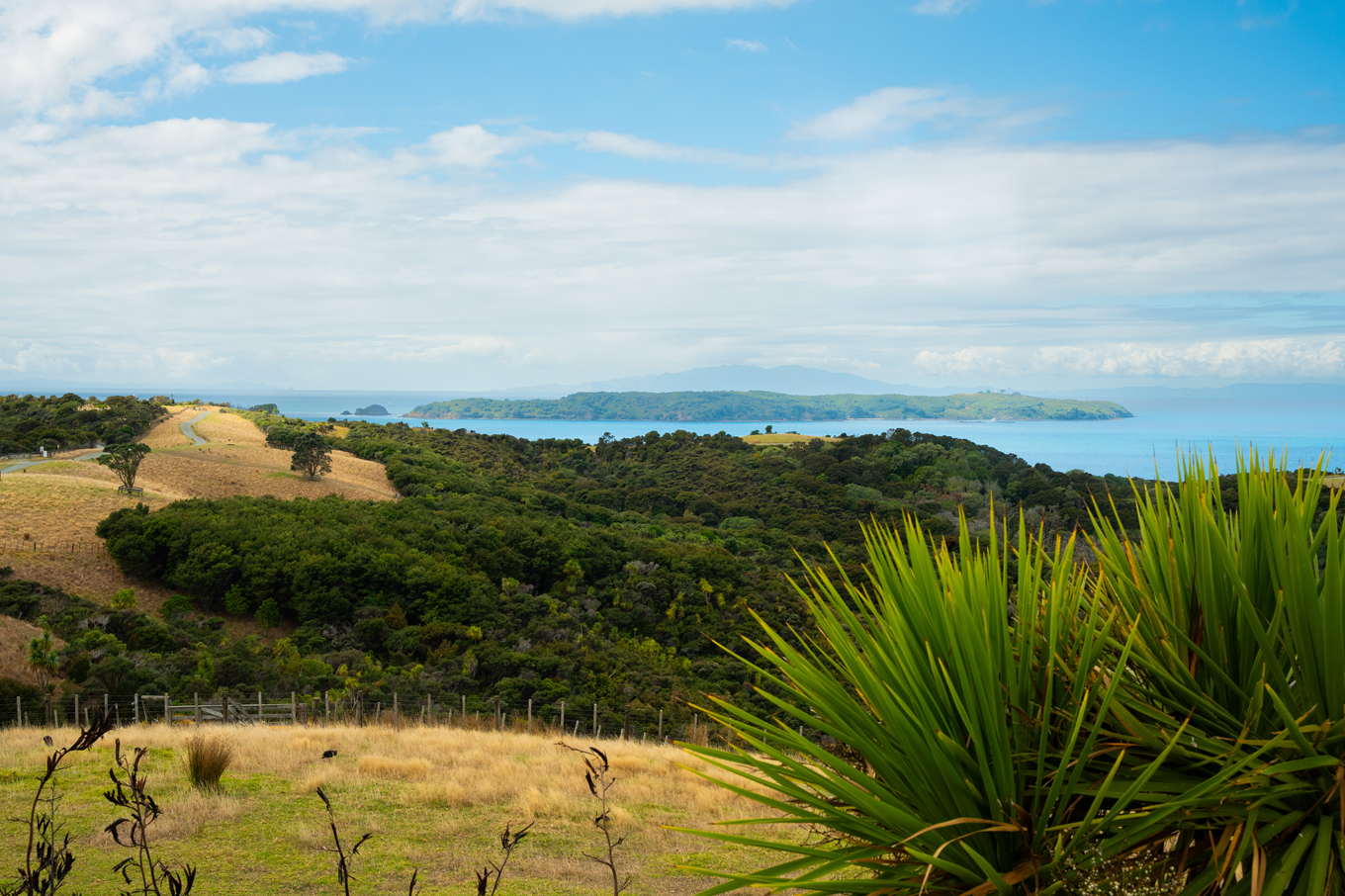
Take in the natural beauty of Tāmaki Makaurau at Te Hāruhi / Shakespear Regional Park.
Te Hāruhi, meaning “the weak or feeble breath”, reflects the sheltered bay and fertile landscape here that supported generations of Māori occupation at Whangaparāoa. Protected from the westerly wind, the area provided a safe landing place for waka and also ideal soil and climatic conditions for growing kūmara, taro, yams and gourds, making it an important centre of food production. The ancient pā near Shakespear Homestead was built to protect pits which stored the year’s kūmara harvests throughout the winter months.
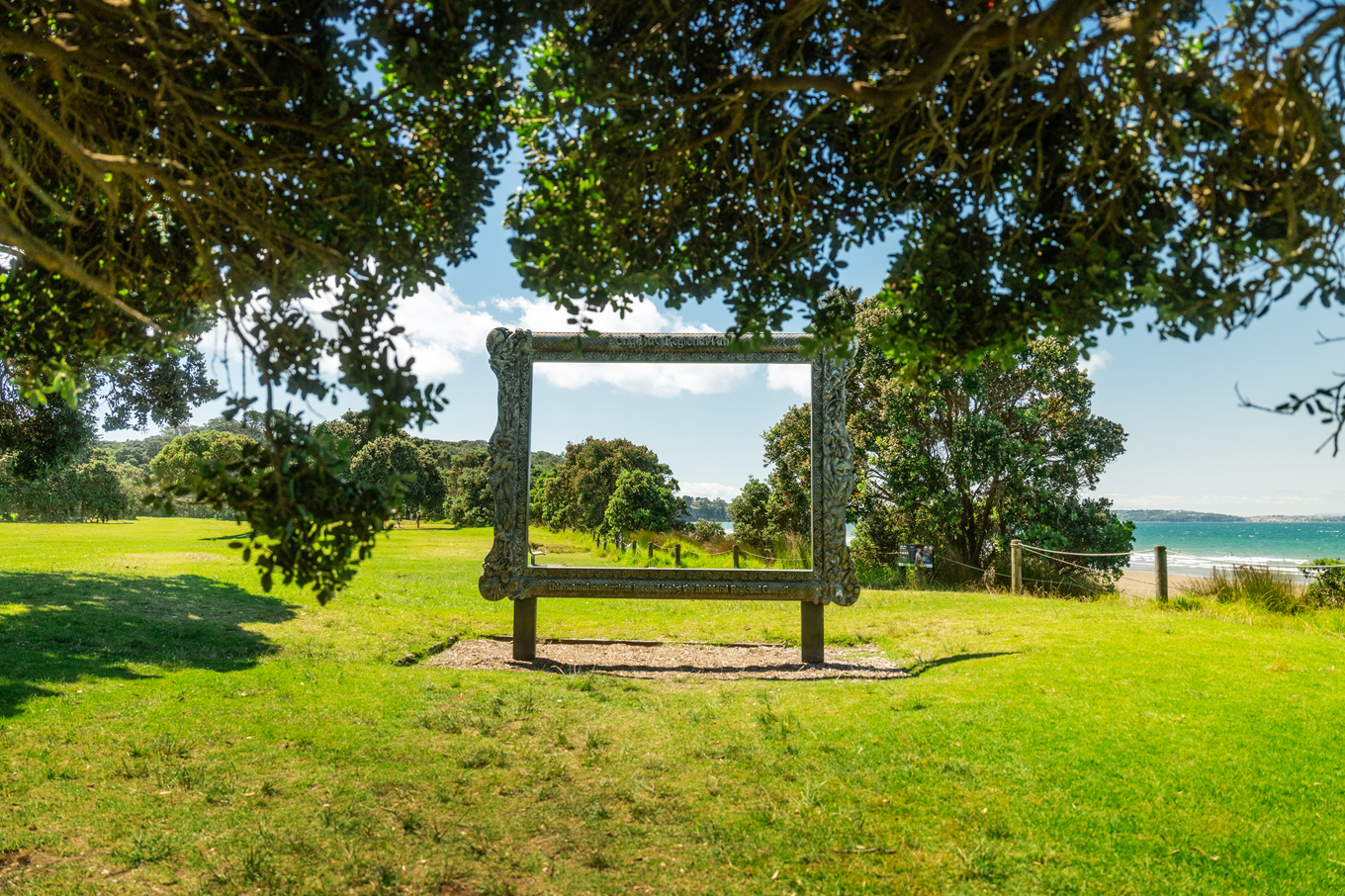
Te Oneroa o Kahu / Long Bay Regional Park is stunning during the warmer months. Come along to walk along the beach or take a lasting image with the large frame on location.
The name Te Oneroa o Kahu honours Kahu, the grand daughter of Maki. Following significant battles at Whakarewatoto (Long Bay) and nearby Karepiro in the early 1600s, Maki and his whānau settled in the area. His descendants, including his granddaughter Kahu and her hapū, subsequently occupied the lands between Maungauika / North Head and Ōrewa, which came to be known as Te Whenua Roa o Kahu - the extensive lands of Kahu.
Maungatauhoro restores a traditional Māori name to Wenderholm Regional Park. It refers to the southern forested section of this landscape, alongside Te Akeake, the name for the flat sandy lands to the north. With nearly a thousand years of human history, this area formed part of the historical Ngāti Rongo landscape. The land was granted to Te Hemara Tauhia in the mid-1800s. Maungatauhoro is part of a wider cultural landscape that holds significance today for many iwi who connect to its long and varied history through both whakapapa and occupation.
Ō Manawatere restores the full name of Manawatere, an ancient Ngāi Tai ki Tāmaki tupuna (ancestor) who journeyed from Hawaiki and explored much of eastern Tāmaki Makaurau. His travels, settlements and descendants are woven throughout the history of the region. Over time the original name was shortened to Ōmana, and the restoration of Ō Manawatere (the place of Manawatere) reconnects the landscape with its full ancestral story.
2. Listen, learn and connect at Te Pā Hono / Auckland Zoo
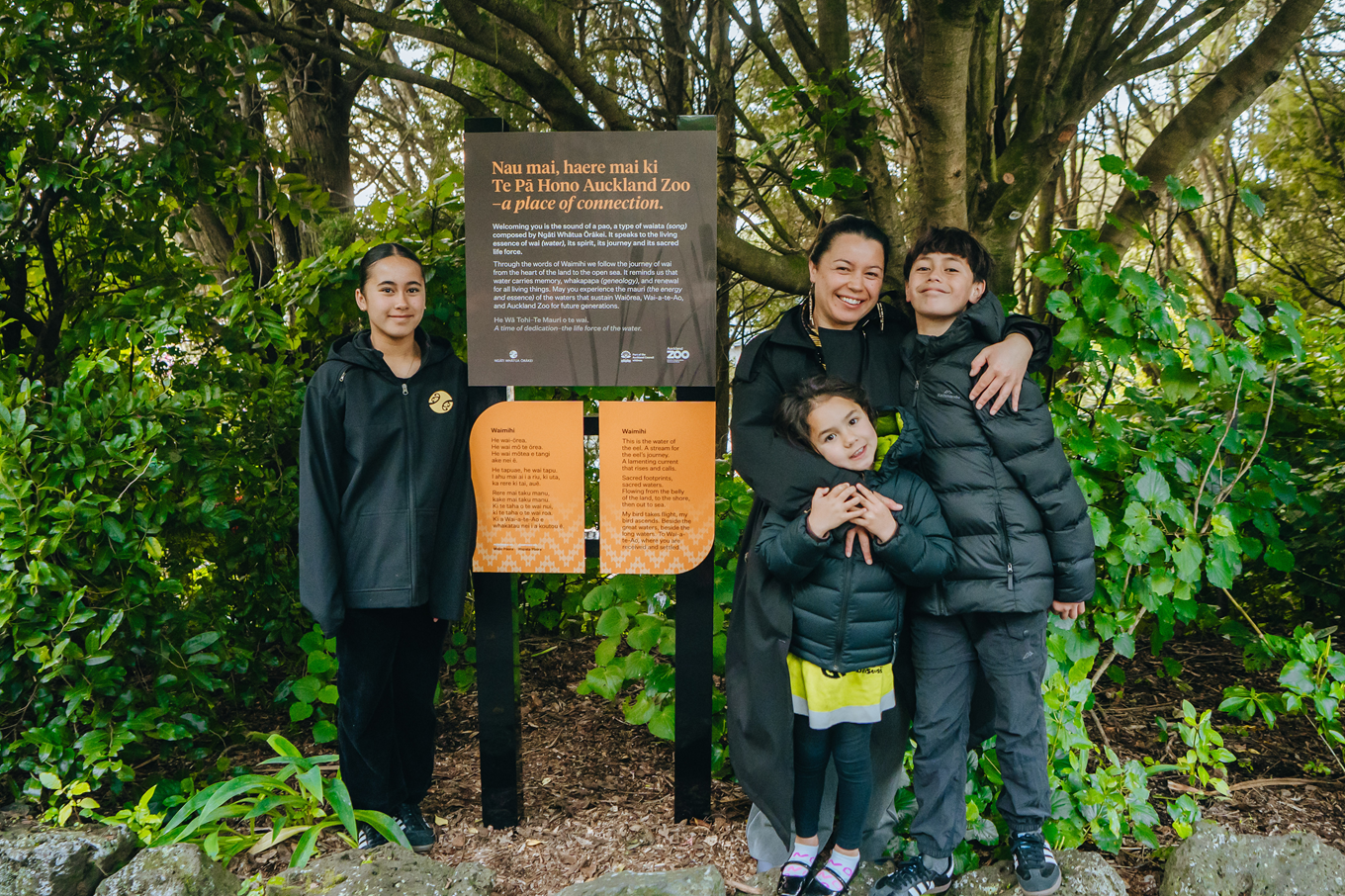
Singer Majic Pāora and her tamariki Te Waiata, Ihaia and Te Āmiorangi celebrating the launch of Waimihi soundscape at Auckland Zoo.
A visit to Te Pā Hono / Auckland Zoo is always a fun time and now it comes with an opportunity to experience te reo Māori with a beautiful new Waimihi soundscape on the Tōtara grove pathway and gardens leading to the onsite café, Te Puna.
This pao (a form of waiata/song), honours the significance of Wai-a-te-Ao/Motions Creek and encourages visitors to appreciate the interconnectedness of all living things and the vital role water plays in sustaining life, culture and the environment. It is composed by Ropata Pāora & Majic Pāora, performed by Majic Pāora of Ngāti Whātua Ōrākei, produced by Abraham Kunin and created in collaboration with Auckland Council Māori Outcomes teams of Te Pā Hono / Auckland Zoo, Te Kete Rukuruku and Ngāti Whātua Ōrākei,
Get immersed in this meaningful and memorable experience that honours mana whenua, elevates te reo Māori and strengthens connections between people, place and culture.
3. Discover Māori collections and resources at your local library
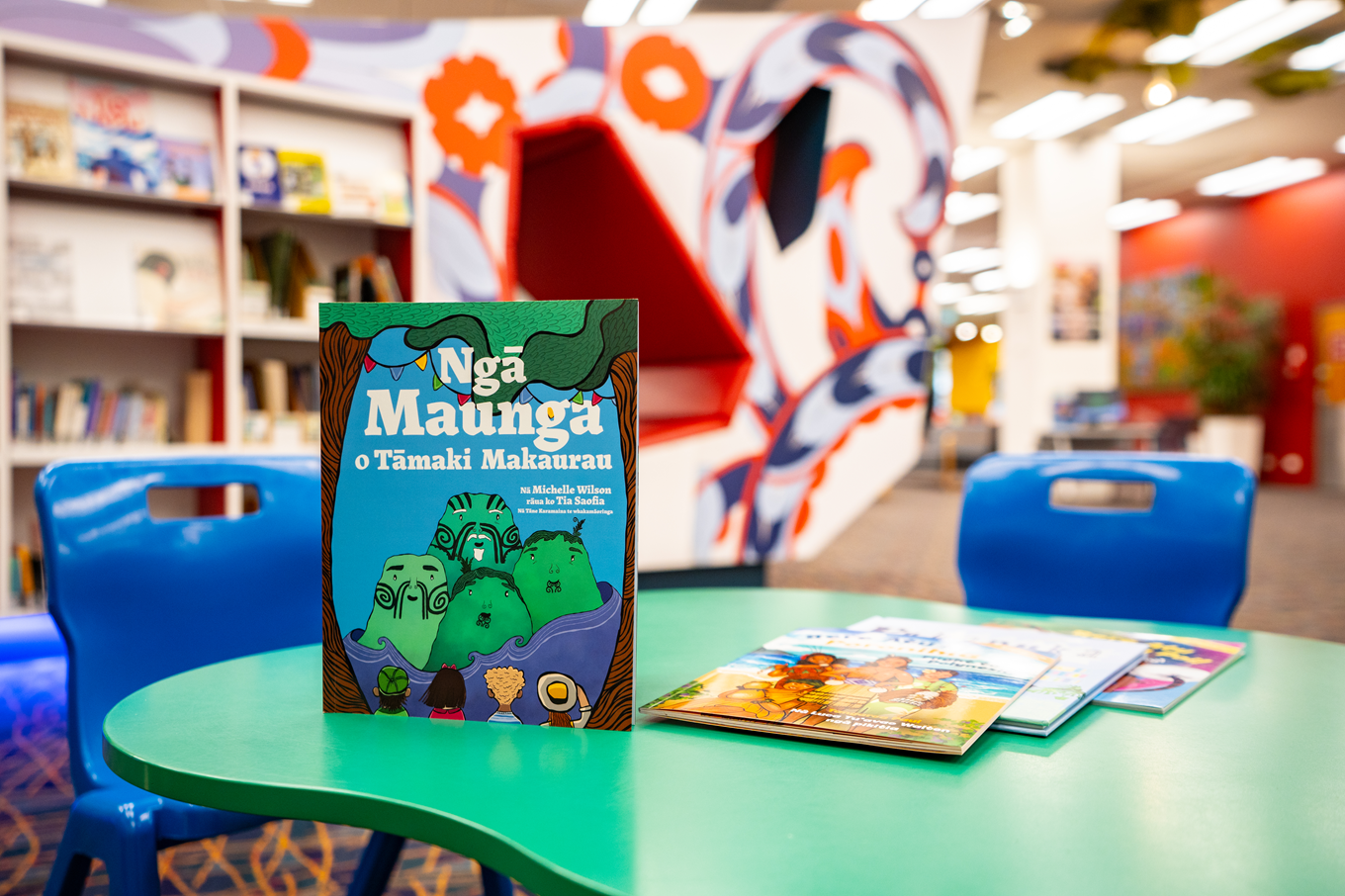
Tap into the breadth of collections and resources available at Ngā Pātaka Kōrero o Tāmaki Makaurau/Auckland Council Libraries! From children’s picture books to language classes like Wāhi Kōrero - Give Te Reo Māori A Go, whakapapa resources, Māori magazines, newspapers and more.
Did you know the Auckland Council Libraries publish their own books? This dedicated publishing programme fills gaps in the libraries' collections to create resources that reflect and serve Auckland’s diverse communities.
Check out one of the latest publications Ngā Maunga o Tāmaki Makaurau I The Maunga of Tāmaki Makaurau, a flip book in both te reo Māori and English, that shines a light on Auckland’s treasured maunga. Co-written by mana whenua mother-and-daughter duo, Michelle Wilson (Hauraki – Ngāti Pāoa, Ngāti Whanaunga, Ngāti Tamaterā, Ngāti Maru) and Tia Saofia (Ngāti Pāoa, Ngāti Tamaterā, Ngāti Maru), and translated by Tāne Karamaina. This pukapuka supports language learning while sharing stories of kaitiakitanga, cultural connection and the landscapes that help shape the identity of Tāmaki Makaurau and combining powerful storytelling with striking illustrations by Saofia.
Read more on te reo Māori related activities and resources at your local library.
4. Connect with te reo, toi Māori and the stories of Tāmaki Makaurau at Auckland Art Gallery Toi o Tāmaki
Celebrate Te Wiki o te Reo Māori with four free events inviting everyone to connect with te reo, toi Māori and the stories of Tāmaki Makaurau. Try kapa haka and learn waiata with Te Tūhononga ki Rāwhiti, hear Poumatua and Head of Kaupapa Māori Joe Pihema (Ngāti Whātua Ōrākei) share kōrero about Te Rā Tuku Whenua, discover the tūpuna portrayed in a tour of Ngā Taonga Tūturu: Treasured Māori Portraits or join a hīkoi through the city centre exploring significant Māori artworks and the historic waterways of Waihorotiu. The tours and kōrero have limited number of spaces so be sure to book your spot so you don't miss out.
5. Discover the magic of language learning at MOTAT
Embrace Te Wiki o te Reo Māori at MOTAT with a week full of playful, creative, and hands-on experiences for tamariki and the wider whānau.
Discover the magic of te reo within Te Puawānanga, where you can play whānau friendly games that focus on pronunciation, word recognition and playful learning through language. Stop by the Science Alive Te Manawa Magic Box to get crafty with a special printing press activity, create and take home your own Māori print, plus plenty more.
Whether you’re exploring the stories behind a regional park, listening to a waiata in a zoo soundscape, reading a bilingual pukapuka with your whānau or immersing yourself in te reo Māori themed activities at Auckland Art Gallery Toi o Tāmaki or MOTAT, every experience is an opportunity to engage, embrace and champion te reo Māori for a week, a month or beyond.