


Most Aucklanders won't see radical or immediate change with Auckland Council taking responsibility for most transport functions on 1 October 2026.
The same buses, trains and ferries will be running, parking charges aren't changing, and other transport services, like road and footpath construction and maintenance, will continue to happen as they do like any other day.
But behind the scenes, Auckland's transport system will be starting to operate in a new way.
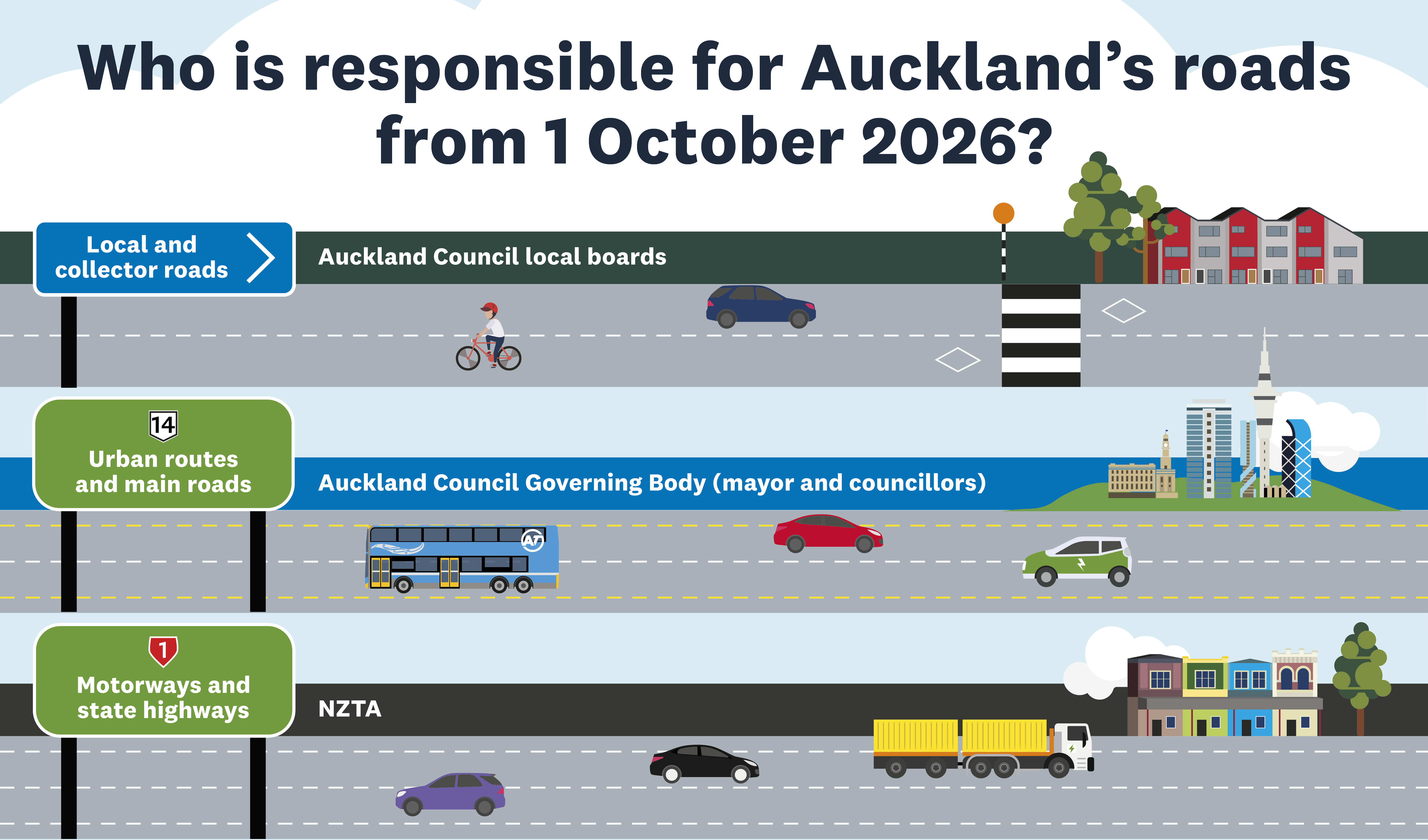
Auckland Council is now responsible for local roads, parking, footpaths, bus lanes, street lighting and speed limits. The changes are part of Auckland's new transport operating model, which bring many transport functions into Auckland Council and gives elected members greater oversight of transport decisions.
Auckland Transport (AT) will continue to operate Auckland's public transport network, including buses, trains and ferries, with a continued focus on delivering safe, reliable and efficient public transport services.
State highways and motorways will remain the responsibility of the NZ Transport Agency Waka Kotahi.
Bringing transport decisions closer to communities
The new model is designed to bring transport decision-making closer to communities and better connected to the way Auckland grows and develops.
Auckland Council Chief Executive Phil Wilson says the changes will help create a more joined-up approach to planning Auckland's future.
"As Auckland grows, it's important that transport planning works alongside decisions about housing, infrastructure and community facilities. Bringing these functions closer together helps us plan more effectively for the needs of Auckland's growing communities."
Mr Wilson says the new transport operating model brings most transport functions under one roof.
“This will make it easier to make efficiencies and improvements at a local level, and for Aucklanders to have their say on transport changes. Ultimately, it's about creating a simpler experience for Aucklanders."
Working closely with government
With the government as a co-funder of much of Auckland’s transport, these changes will see the council work much more closely with the Crown on long-term transport strategy and planning.
A new Auckland Regional Transport Committee, with representatives from the council and the Crown has been established, which will develop a 30-year transport plan to guide planning and funding decisions over the long term. We should see clearer, agreed priorities with more climate commitment to them being delivered.
What will change?
While much will stay the same, there are a few changes Aucklanders may notice under the new transport operating model.
AT Park becomes AC Parking
If you use the AT Park app, you'll be prompted to update it as it becomes AC Parking.
The app will continue to work much as it does today, and existing accounts, parking payments and parking infringement services will remain unchanged.
Reporting local issues
Auckland Council will now manage requests relating to things such as potholes, damaged footpaths, broken streetlights and bus shelters.
Residents can continue to report issues online through Auckland Council's Report It service.
Having your say on transport changes
If changes are proposed in your area, such as new pedestrian crossings, parking changes, speed limits, bus lanes or intersection upgrades, public engagement will now be run by Auckland Council.
Local boards will also play a bigger role in a range of neighbourhood-level transport decisions.
What's staying the same?
For most Aucklanders, day-to-day transport services will continue as normal.
- Buses, trains and ferries will continue to be operated by Auckland Transport.
- The same Auckland Transport customer support will remain available.
- Parking charges and payment methods are not changing. Parking will be Auckland Council Parking rather than AT Park.
Why are these changes happening?
The changes follow new legislation passed earlier this year that gives Auckland Council greater responsibility for transport decision-making.
The aim is to create clearer accountability, strengthen local decision-making and better connect transport planning with the wider work of shaping Auckland's future.