


Mud on their boots, native trees in their hands and smiles on their faces. That's how thousands of Auckland students have helped grow a greener future this year through Trees for Survival.
Across Tāmaki Makaurau the 2026 planting season has wrapped up with a milestone worth celebrating: more than 100,000 native plants grown and planted by 118 Auckland schools and involving more than 3,300 rangatahi.
While the trees are flourishing, so too is the organisation behind them. Trees for Survival was recently named Winner of the 2026 South and East 2degrees Auckland Business Awards Excellence in Strategy Award, recognising its long-term vision, measurable impact and ambitious plans for future environmental restoration.
For 35 years, the Trees for Survival Charitable Trust has connected schools, landowners and communities through practical environmental action, now working with 252 schools around the country.
From Awhitu to Hunua, Kawakawa Bay to Tapora, students have been getting their hands dirty and making a real difference for waterways, wildlife and future generations.
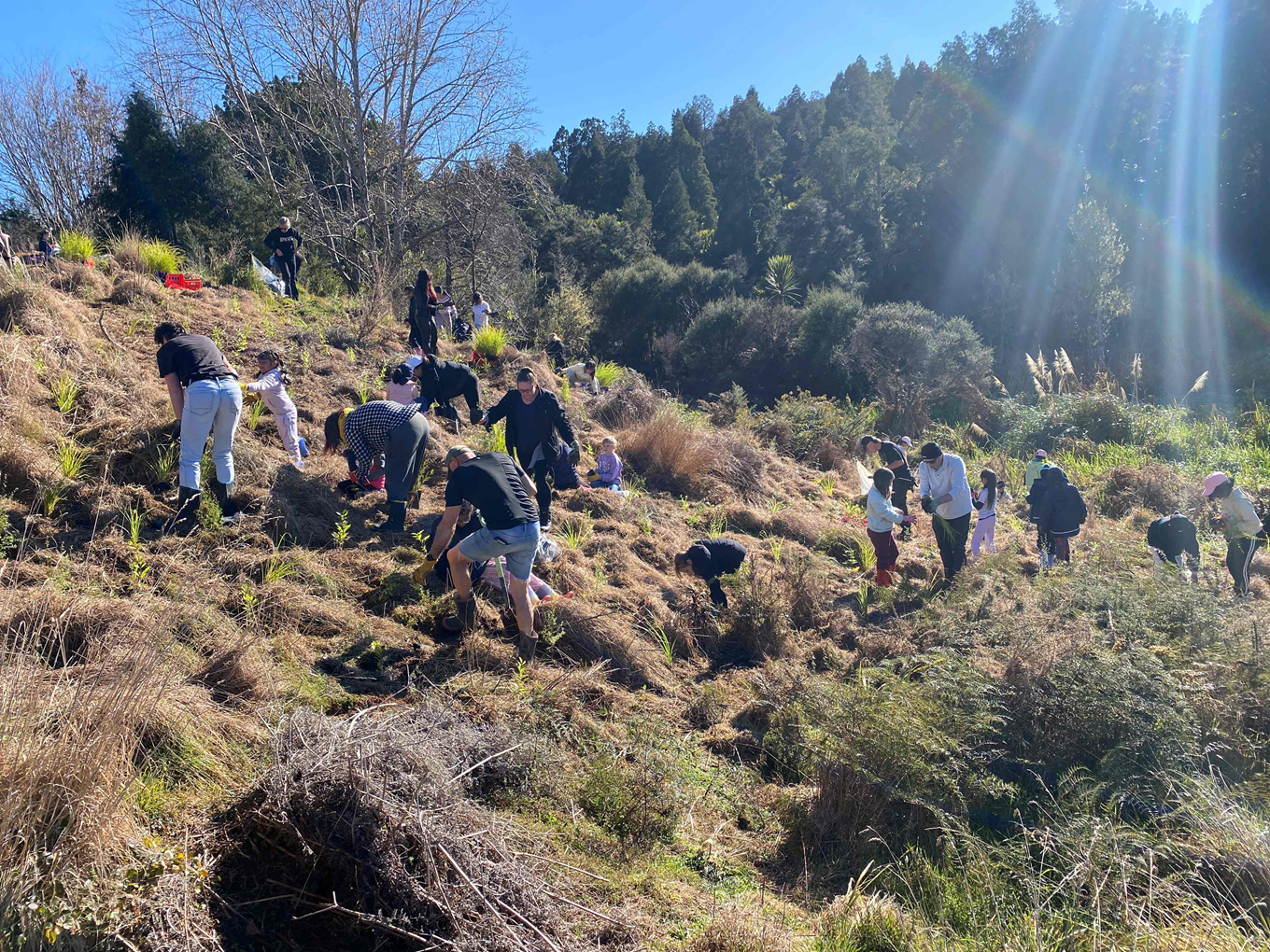
Albany Primary School students planting trees.
Each school in the programme is supplied with an irrigated growing unit and resources including around 900 native plant seedlings every year. Tiny native seedlings are nurtured by young people in school growing units and months later are planted on farms, stream edges and restoration sites.
"It's almost like the lifeforce of the land breathes back a thank you," says Kate de Groot, Auckland Council’s Sustainable Schools Advisor and Trees for Survival Coordinator.
"When our youth have a chance to slow down and look at what their individual actions create as a whole, there is a deep inward breath of satisfaction and wonderment. They feel the difference they have made to the environment."
A sense of connection is at the heart of the programme
Many students are experiencing farm environments, native planting and hands-on conservation for the first time. Along the way they're discovering worms, insects, birds and streams, while learning that small actions can add up to something extraordinary.
As Sally Clegg, Trees for Survival Partnership Manager, puts it: "Growing native trees at schools gives students a sense of ownership. When they go out to plant them nine months later, they do this with great pride and a sense of satisfaction that they have taken steps to restore their local environment. They are leaving a very positive legacy for all."
Visible results across Auckland
In Leigh, a once-rank kikuyu grass site has been transformed into a growing restoration area with a long-term goal of reducing sediment entering the nearby marine reserve.
In Awhitu, students were delighted to discover spawning inanga in a stream running through a former gorse-covered property that is now becoming a restoration success story.
In Hunua, kōkako calls are being heard near planting sites protecting precious native bush, while kingfishers have appeared on recently restored land. Across other sites, volunteers have reported sightings of dotterels, plovers, kākā, bittern and even kiwi footprints.
Benefits that extend beyond trees
The programme's impact extends far beyond planting days. In Auckland more than 7 kilometres of waterways have been fenced and planted this year, helping to improve water quality, reduce erosion, provide habitat for native species and protect significant forest areas, including kauri ecosystems and remnant bush.
The work is made possible through a powerful partnership between Trees for Survival, Auckland Council, schools, landowners, community groups, sponsors and volunteers.
"The magic is the people," says de Groot. "Landowner commitment, teacher commitment, sponsors, facilitators, the Trees for Survival Charitable Trust and of course our wonderful youth."
Many landowners continue restoration journeys for years after hosting their first school planting day, sharing stories of flourishing biodiversity and stronger connections to their land.
For Auckland Council Healthy Waters Senior Specialist Anna Halliwell, the programme's legacy is as much about people as it is about plants.
"I think there's something around the number of adults who remember their Trees for Survival experiences, and it's shaped them to become volunteers in future," she says.
"I think the ecological and stream health impacts have been huge and contribute to the wider health of our harbours."
With over one million native plants planted by Trees for Survival schools over the last 10 years, the Trust aims for schools to plant another one million by 2030. Contributing to this goal, this spring Auckland schools will receive another 100,000 native seedlings which will be transplanted into school growing units, ready for planting in 2027.
A reminder that when communities work together, even the smallest seedlings can grow into something remarkable.