


Auckland Council says the conviction and sentencing of prominent Auckland property developer, philanthropist, David John Sax, once described as an "ethical property magnate", and his company Frankel Consultants Limited, demonstrates that environmental laws apply equally to wealthy developers and major commercial operators.
In the Auckland District Court, Frankel Consultants Limited was fined $170,000 after admitting breaches of an abatement notice and carrying out extensive unconsented earthworks at a contaminated former landfill site in Captain Springs Road, Te Papapa in breach of the Resource Management Act (RMA), while Mr Sax was discharged without conviction and ordered to pay $15,000 to a charity.
The offending took place between April 2021 and December 2022, on a site known to contain asbestos-contaminated material and located adjacent to environmentally sensitive coastal areas connected to the Māngere Inlet. The site had previously been the subject of environmental enforcement action and prosecution.
The prosecution established that approximately 30,986 square metres of land was disturbed at the site, more than 12 times the permitted threshold. The works occurred on land known to contain asbestos and within a sensitive coastal protection area. The council alleged that despite longstanding knowledge of the site's contamination history and repeated warnings about consent requirements, earthworks continued and remediation obligations were not met.
Judge's comment from previous prosecution
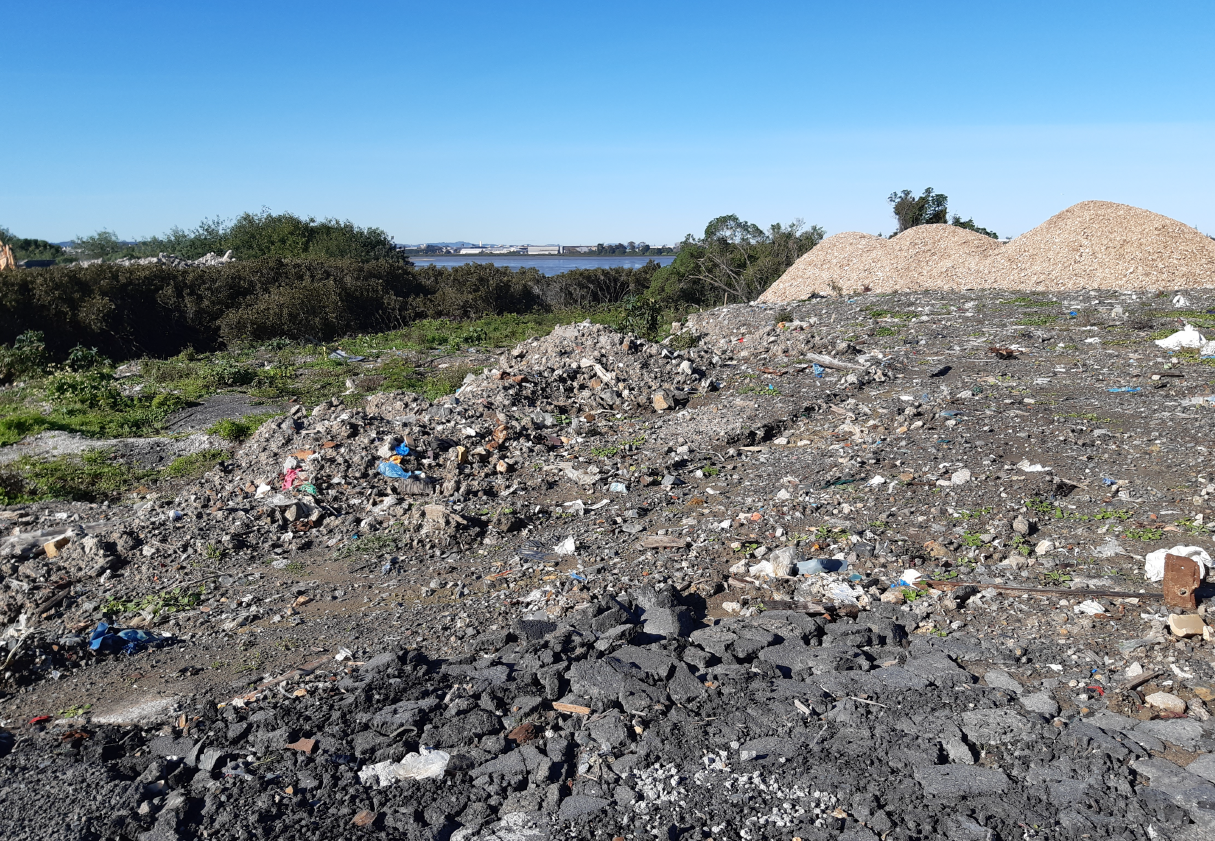
Unconsented earthworks on Captain Springs site.
In an earlier prosecution in 2008 involving the same site, Judge Jeff Smith recognised the serious risks associated with exposing asbestos-contaminated material and the obligations on those responsible for the site.
The Court accepted undertakings given during the 2010 prosecution that remediation would occur and significantly reduced penalties on that basis and withdrew the RMA charge.
The Crown submitted in the present case that the promised remediation was never completed and that the same contaminated stockpiles became central to the current offending.
On that occasion Judge Smith said, "sentences should also foster the principle of environmentally responsible corporate citizenship and reflect general deterrence."
He also reminded the Court of the long-standing judicial warning that:
"If a fine is not at that level, it simply becomes a fee for a de facto licence to pollute and an absorbable item in the costs of doing business."
Council response
Chair of the Regulatory and Safety Committee Josephine Bartley says this case was not a case of someone misunderstanding the rules.
“The site's contamination issues were well known, the consent requirements were well known, and formal enforcement notices were issued. Yet the offending continued."
"Developers who choose to ignore the Resource Management Act place workers, neighbouring communities and sensitive environments at risk. The rules are there to protect people and the environment, and they apply equally to everyone.
Auckland Council Team Leader Investigations Paul Cowling said the case demonstrates why strong enforcement remains essential.
"Far too often we see developers treat environmental compliance as something to be dealt with later. These developers need to learn to abide by the Resource Management Act instead of trying to circumvent it. Consents are not optional and neither are abatement notices."
"This behaviour cannot continue. Auckland Council will not hesitate to investigate and prosecute where there are serious breaches, particularly where contaminated land, public health and environmentally sensitive areas are involved.”
The agreed facts noted that inadequate controls could have exposed workers and members of the public to contaminants including asbestos, while sediment-laden discharges entered waterways connected to the Māngere Inlet. Council investigators also documented repeated failures to comply with remediation requirements and stop-work notices.